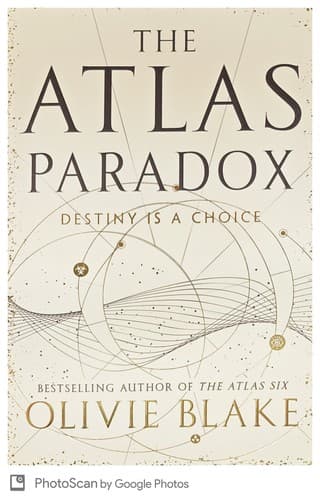
The Atlas Paradox (The Atlas, #2)
by Olivie Blake
What is “The Atlas Paradox (The Atlas, #2)” about?
Six gifted magicians find themselves fractured by competing loyalties and dangerous secrets as the true intentions of the Alexandrian Society come to light. Loyalties shatter, hearts ache, and in a world where knowledge wields catastrophic power, each must choose a side—never certain which alliances will hold and which will betray them.
About This Book
In "The Atlas Paradox," the second installment of Olivie Blake's dark academia trilogy, six exceptional magicians are drawn into the enigmatic Alexandrian Society, a clandestine organization safeguarding the world's most potent knowledge. The narrative delves into the intricate dynamics among the initiates—Tristan, Callum, Parisa, Nico, Libby, and Reina—as they navigate the Society's complex web of secrets and power struggles. Libby Rhodes, a brilliant physicist, finds herself mysteriously transported back to 1989, where she confronts the challenges of returning to her original timeline.
The story is propelled by the characters' evolving relationships and the looming threat of the Society's true intentions. As alliances shift and personal ambitions surface, the initiates grapple with moral dilemmas and the consequences of their choices. The atmosphere is charged with tension, suspense, and a sense of impending upheaval, as each character is compelled to decide where their loyalties lie.
Blake's narrative intricately weaves themes of power, knowledge, and identity, immersing readers in a world where the pursuit of truth is fraught with peril. The novel's slow-burn tension and complex characterizations create an intense and immersive experience, inviting readers to explore the depths of ambition and the human psyche.
What Readers Say
Readers appreciate the deep character development and complex relationships in 'The Atlas Paradox'. Many praise Olivie Blake's writing for its intricate world-building and engaging prose. Fans note the emotional depth and moral ambiguity that add layers to the narrative. Some readers criticize the slow pacing and lack of significant plot progression in the middle sections. Caution: The book contains mature themes and complex character dynamics that may not appeal to all readers.